Summary: Custom Thermal Labels Buffalo NY give businesses more flexibility than standard labels by allowing choices in size, material, adhesive, print area, and roll format. They can support clearer product identification, barcodes, and organized workflows. Inventory Control Labels Buffalo NY can also help businesses improve stock visibility when labels are designed around their products, printers, and daily processes.
A label may look small, but it plays a big role in how products, boxes, and items are identified. Standard labels work well for basic needs, but some businesses need a better fit for their size, printer, material, or branding. Custom Thermal Labels Buffalo NY can offer more flexibility, clearer printing, and a label design built around the job instead of forcing the job to fit a standard label.
The Main Difference Starts With Flexibility
Standard labels are usually made in common sizes and shapes. This can be fine for simple tasks. But a business may need a label that fits a small package, a long box, a shelf, or a special product surface. Custom labels give more room to choose what works best.
The size, shape, material, print area, and other details can be planned around the real use. This helps reduce wasted space and makes the label easier to read. A custom approach is useful when a standard label feels too large, too small, or simply does not match the task.
Why Does Label Size Matter So Much?
The right size can make a label easier to scan and read. A label that is too small may not leave enough room for a barcode, product name, date, or other key details. A label that is too large may waste material and make the package look crowded.
Custom sizing helps businesses use the space in a smarter way. A small product can use a compact label, while a larger package can use more room for important information. The goal is simple: use enough space to keep the label clear without adding extra material.
Printing Needs Can Change the Label Choice
Not every thermal printer works with every label type. Printer size, roll size, label stock, and print method all matter. Some thermal printers use heat directly on the label. Others use a ribbon to transfer ink onto the label. The correct label should match the printer and the type of print needed.
This is one reason custom label planning can be helpful. A label supplier can help match the stock and format to the printer instead of leaving you to guess. The better the match, the easier the printing process can be.
What Can Be Customized?
Customization can cover more than just the label size. Different jobs call for different label features.
A business may need:
- Special label sizes or shapes
- Different label materials
- Stronger adhesive options
- Specific core or roll sizes
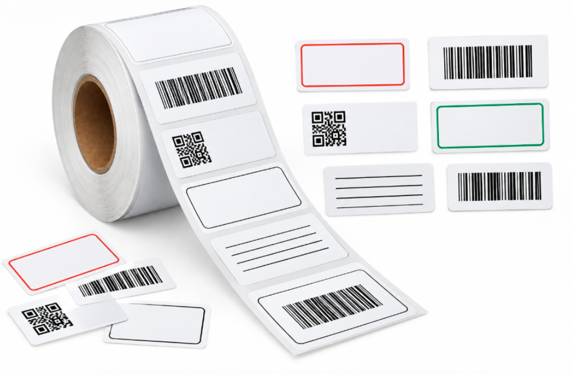
- Barcode-friendly print areas
- Extra room for product details
- Labels made for indoor or certain outdoor uses
The best choice depends on the product, storage conditions, printer, and amount of handling the label will face.
Standard Labels Still Have Their Place
Custom labels are not always necessary. Standard labels can be a good fit when a business has simple needs and a common label size works well.
For example, a company that prints the same basic shipping label every day may not need a special design. The key is to choose based on the job. A standard label can work very well when the size, material, and print area already match the need. Custom labels become useful when the standard option starts causing limits.
When Is a Custom Label the Better Choice?
A custom label may make more sense when a business has unique products, special packaging, or more detailed labeling needs.
Think about a product with a curved surface. A large box with several barcode fields may also need a different layout. A small item may need a narrow label that keeps the print clear without covering too much of the product. In each case, the label needs to fit the real task. Custom printing gives the business more control over that fit.
Better Labels Can Support Faster Daily Work
A good label should make work easier, not slower. When the size and print area are right, staff can spend less time fixing poor placement or dealing with labels that do not fit the product.
Clear barcodes can also help scanning. Simple layouts can make product details easier to find. Strong adhesive can help reduce labels that lift or fall away during normal handling. A small improvement in labeling can save time when the same task is repeated hundreds or thousands of times.
How Do Custom Labels Support Better Organization?
Good labeling helps keep items easy to identify. This matters in warehouses, stores, shipping areas, offices, and production spaces. A clear label can show a product name, part number, barcode, date, location, or other key detail. When every label follows a clear pattern, staff can find and read information faster.
For businesses that manage large amounts of stock, Inventory Control Labels Buffalo NY can support a more organized system by giving each item clear and useful information. The label becomes part of the larger workflow, not just a sticker on a box.
Choosing the Right Material and Finish
The label material should match where and how the label will be used. Paper labels can work well for many indoor tasks. Synthetic materials may be a better fit when a label needs more strength or resistance to moisture and handling. The adhesive matters too. A label used on cardboard may need a different adhesive than a label placed on plastic.
Think about the full life of the label. Where will it go? How long should it stay in place? Will it face heat, moisture, rubbing, or frequent handling?
These questions can help guide the right choice.
Custom Labels Should Fit the Business, Not the Other Way Around
The best label is not always the most complex one. It is the one that fits the printer, product, workflow, and daily task. Before placing an order, check the label size, printer type, print method, material, adhesive, and roll setup. A clear plan can prevent printing problems and reduce wasted labels.
Labels Xpress can help businesses choose a label setup that fits real printing and labeling needs. A custom label can be a simple upgrade, but the right details can make a big difference in daily work.
A Better Label Starts With the Right Fit
Standard labels are useful for common tasks, but custom options give businesses more control. With the right size, material, adhesive, and print area, a label can work better for the product and the process.
Custom Thermal Labels Buffalo NY can help businesses move beyond one-size-fits-all labeling. Labels Xpress can help you review your labeling needs and choose an option that fits your products, printer, and workflow. For more information, call (716) 875-9699 or email sales@labelsxpress.com. Start by considering what the label needs to do, what printer you’ll use, and where the label will go. Once those details are clear, choosing the right label becomes much easier.
Frequently Asked Questions
1. What are custom thermal labels?
Custom thermal labels are labels made in sizes, materials, layouts, or other formats that match a specific printing or labeling need.
2. Are custom labels better than standard labels?
Custom labels can be a better fit when a standard size or material does not meet the needs of the product or workflow.
3. Can custom thermal labels work with any printer?
No, the label type should match the printer, print method, roll size, and other printer requirements.
4. What information can be printed on thermal labels?
Thermal labels can include barcodes, product names, item numbers, dates, shipping details, and other useful information.
5. How do I choose the right label material?
Choose the material based on the product surface, expected handling, storage conditions, and how long the label needs to stay in place.