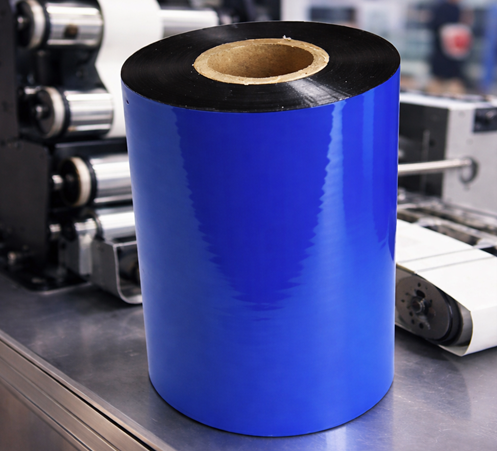
In heavy-duty industries, labeling goes beyond simply applying information; it’s about ensuring that data withstands extreme conditions like dust, high temperatures, chemicals, oils, abrasion, and constant rough handling. Industrial Thermal Transfer Ribbons are engineered specifically for this purpose, delivering sharp, long-lasting barcodes, text, and graphics on labels or tags that remain scannable and legible for years.
These ribbons are optimized for industrial-grade thermal transfer printers, not desktop models. We feature longer roll lengths (typically 450m to 600m, with some up to 625m or more), larger 1-inch cores, robust back-coatings to minimize static and print head wear, and formulations built for high-volume, 24/7 operations. This design reduces changeovers, cuts downtime, and matches the ruggedness of industrial printers that handle vibrations, dust, and continuous use far beyond desktop capabilities.
Why Industrial-Grade Thermal Transfer Ribbons Are Essential for Heavy Operations
In factories, warehouses, and field environments where reliability is non-negotiable, these ribbons ensure durable prints resistant to smudging, fading, chemicals, and mechanical damage. We support accurate tracking, regulatory compliance, and workplace safety while minimizing errors, rework, and costly disruptions.
How Thermal Transfer Printing Works in Industrial Settings
The printer’s thermal print head selectively heats elements to melt ink from the ribbon, transferring and bonding it permanently to the substrate. This creates high-contrast, embedded images far superior in durability to direct thermal printing (which uses heat-sensitive paper and fades quickly under harsh exposure). Industrial ribbons include protective back-coatings that reduce friction, static, and wear on print heads during extended runs.
Ribbon Types Tailored to Industrial Demands
Selecting the right formulation is critical for matching environmental challenges and substrates:
- Wax ribbons — Cost-effective for standard indoor applications on paper labels, delivering good print quality at high speeds but with limited resistance to chemicals or abrasion.
- Wax-resin ribbons — Versatile for moderate harsh conditions, offering improved scratch, smudge, and chemical resistance on coated paper or synthetics like polypropylene—ideal for outdoor or solvent-exposed uses.
- Resin ribbons — The premium choice for extreme environments, providing exceptional bonding to synthetics (polyester, vinyl, polypropylene) with superior resistance to harsh chemicals, solvents, oils, high heat (often 150°C+), UV exposure, abrasion, and weathering. These deliver the most enduring prints, suitable for decades in tough settings.
Key Benefits in Rugged Industrial Use
Prints resist grease, oils, brake fluid, engine heat, outdoor elements, and repeated handling while maintaining high-resolution barcodes (up to 600 dpi) that scan reliably, even on curved or textured surfaces. Larger ribbon capacities support high-speed production lines, significantly reducing media reloads and operational interruptions.
Applications in Manufacturing
Assembly lines rely on labels for parts, assemblies, and finished goods. Labels Xpress’s industrial thermal transfer ribbons that stand up to factory grease, heat, and constant handling. This keeps serial numbers, batch codes, and safety warnings clear, supporting smooth traceability, strong quality control, and better worker efficiency.
Uses in Logistics and Warehousing
Fast-moving goods face stacking, conveyors, and rough transport. These ribbons produce scanable barcodes and shipping labels that survive abrasion, rain, and repeated scans, ensuring accurate inventory tracking and on-time deliveries.
Role in the Automotive Sector
Vehicle components like engines, tires, frames, and under-hood parts require lifelong identification. Resin-based prints withstand oil, vibration, extreme temperatures, and environmental exposure, making compliance stickers and data easily readable for dealers, repairs, and recalls.
Other Heavy-Duty Fields That Benefit
Chemical plants label drums against corrosive agents. Construction sites tag tools and materials exposed to sun, moisture, and dirt. Outdoor equipment and pharmaceutical packaging achieve strict durability and regulatory compliance with high-performance wax-resin or resin options.
Choosing the Right Industrial Ribbon
Align the ribbon type with your exact conditions: assess temperature ranges, chemical exposure, abrasion, substrate, and printer model. Always test samples in real-world scenarios and fine-tune print head temperature and speed for optimal adhesion and density. Consistent, high-quality coatings prevent issues like breakage or poor transfer that could disrupt production.
In demanding industries, Industrial Thermal Transfer Ribbons are proven, engineered solutions that deliver reliable, clear prints for safety, compliance, and efficient workflows.
For specialized options, including high-quality Thermal Transfer Ribbons Buffalo NY, from trusted local suppliers, consult an expert provider today. Durable labeling isn’t optional in these environments; it’s foundational.
FAQs
What sets industrial thermal transfer ribbons apart from standard ones?
Industrial Thermal Transfer Ribbons are sized (longer rolls, 1-inch cores) and formulated for high-volume, rugged industrial printers, offering superior durability in harsh conditions compared to desktop-oriented ribbons.
How do they differ from direct thermal printing?
Thermal transfer uses a ribbon for ink bonding, creating far more resistant, long-lasting prints against fading, chemicals, and abrasion. Direct thermal relies on heat-sensitive paper and degrades quickly in tough environments.
Which ribbon offers the best chemical resistance?
Full resin ribbons provide the highest protection against harsh solvents, oils, acids, and extreme conditions, especially on synthetic labels.
Do these ribbons work on plastic or synthetic materials?
Yes, wax-resin and especially resin types bond excellently to polyester, vinyl, polypropylene, and other synthetics for outdoor or chemical-heavy applications.
How long can the prints last?
Depending on the ribbon (resin being the most durable), substrate, and exposure, prints can remain legible for years to decades in demanding industrial settings.